Case Study:
Procurement Transformation
Initial Situation
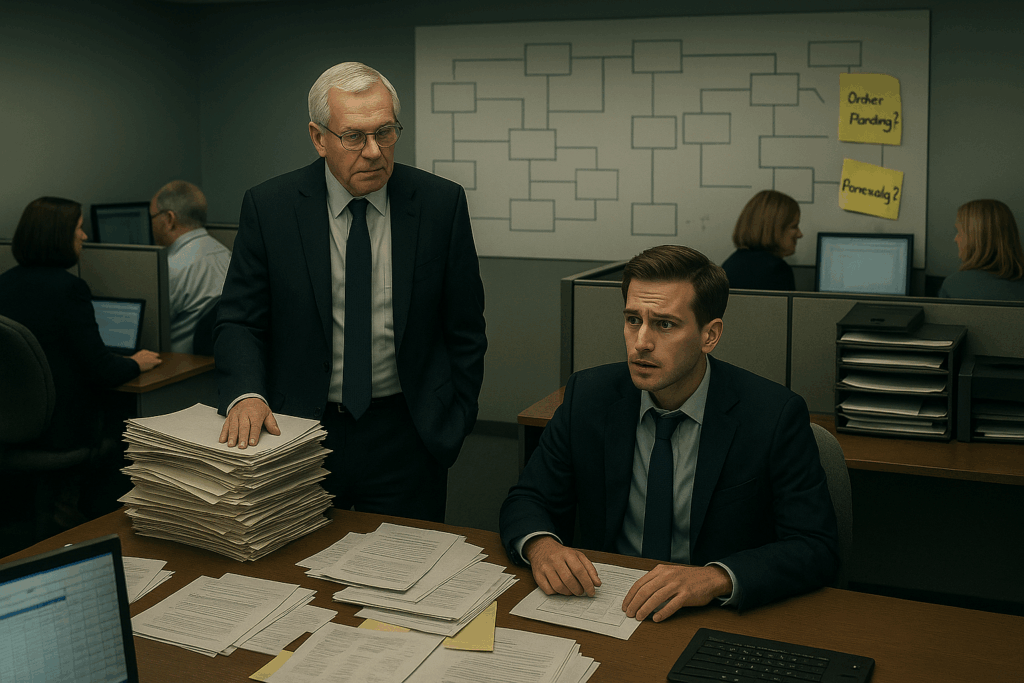
- Historically grown procurement structure, fragmented across functions
- No standardized processes, roles or responsibilities
- Lack of transparency despite multi-billion euro purchasing volume
- Demographic shift created risk of knowledge loss
Actions & Approach
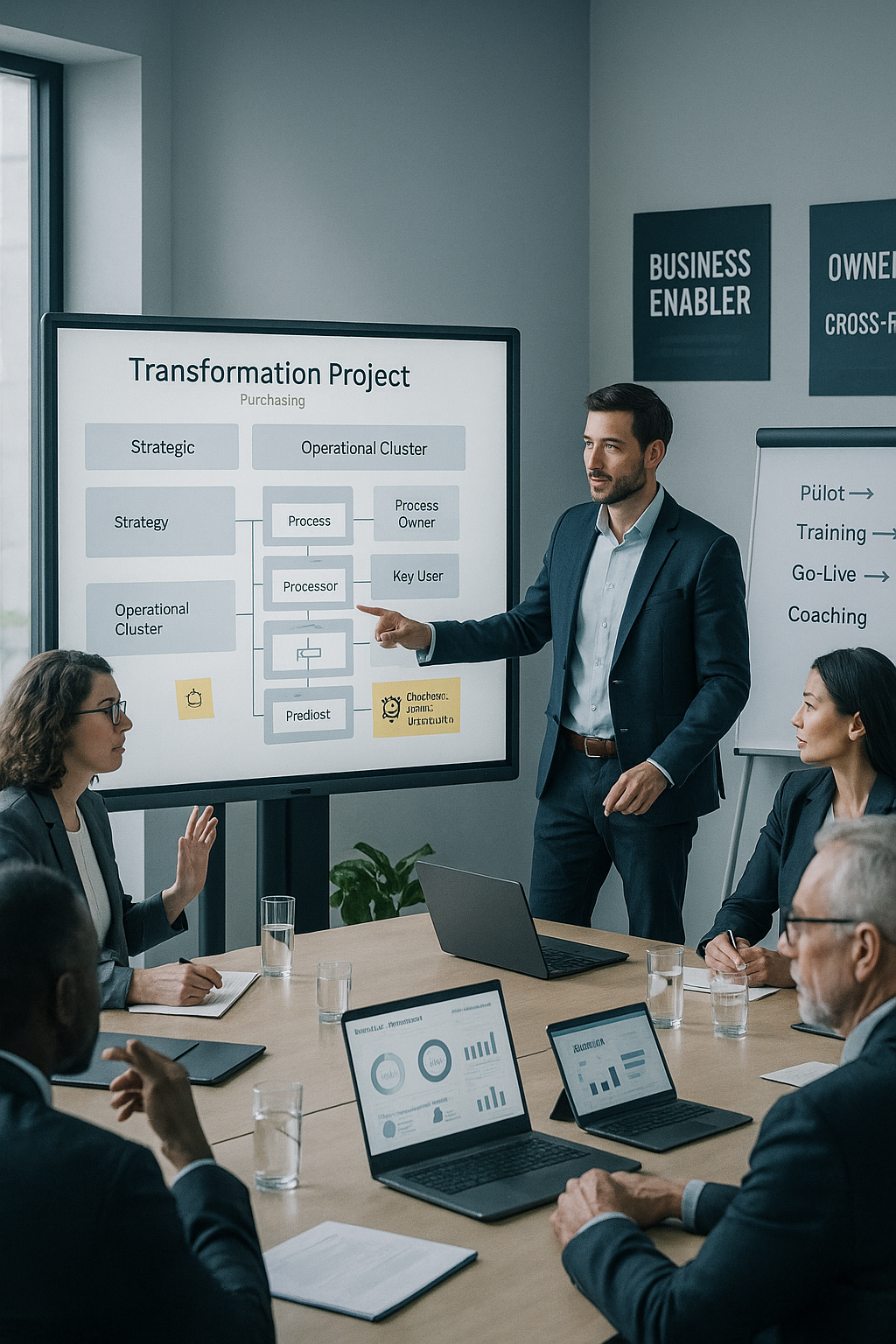
Execution of a transformation project
1. Vision & Organization
- Developed a company-wide Operating Model
- Structured 50+ processes
- Introduced cross-functional role models
2. Process Design & Digitization
- Harmonized key processes:
Forecast screening / Order changes / Supplier contracting & risk management
- Identified automation potential
- Built KPI-driven steering tools
3. Leadership & Change
- Empowered decentralized teams
- Clearly assigned responsibilities
- Integrated Legal, Finance & Sales
4. Execution & Culture Shift
- Multi-phase rollout (Pilot → Training → Go-Live → Coaching)
- Established ongoing review & lessons learned processes
- Positioned the department as a “Business Enabler”
Results & Impacts
- Transparency: 50+ processes clearly defined, KPI ownership established
- Efficiency: Reduced coordination overhead via defined role models
- Risk Mitigation: Early warning systems for inventory risks, supply gaps & contract issues
- Cultural Shift: True collaboration with Sales, Finance & Legal
- Sustainability: Identified and developed next-generation leadership talent